
The Basics: What California Expects From You on the Road
Honestly, trying to figure out car insurance in California can feel like solving a riddle. You’re not alone if you’ve felt confused, frustrated, or even a little angry about the whole thing. It’s expensive. The rules seem to shift. And sometimes, it feels like no one really wants to help you understand it all. But here’s the thing: understanding the basics, especially as we look toward 2026, really matters.
The state of California has minimum liability requirements for all drivers. They haven’t changed in a long time, and honestly, they probably won’t by 2026 either. We’re talking about what’s known as “15/30/5” coverage. What does that mouthful actually mean?
* $15,000 for injury/death to one person: If you cause an accident, your insurance will pay up to $15,000 for medical bills or other damages for a single injured person.
* $30,000 for injury/death to multiple people: If more than one person is hurt in an accident you cause, your insurance will pay up to $30,000 total for their injuries.
* $5,000 for property damage: This covers damage to the other person’s car or property, like a fence or a mailbox, up to $5,000.
That’s the bare minimum. You’ve got to carry proof of this coverage in your car, and if you don’t, you’re looking at fines, license suspension, and your car could even get impounded. Not a fun day.
Beyond the Minimums: Why Just Enough Isn’t Enough
But wait — let’s be real for a second. Have you seen the cost of anything lately? $15,000 for an injury doesn’t go very far these days. A trip to the emergency room in Los Angeles for a minor injury could easily chew up that entire amount, and then some. A broken bone? Major surgery? You’d be on the hook for everything over that $15,000 limit. That’s a huge financial risk, a devastating one for many families.
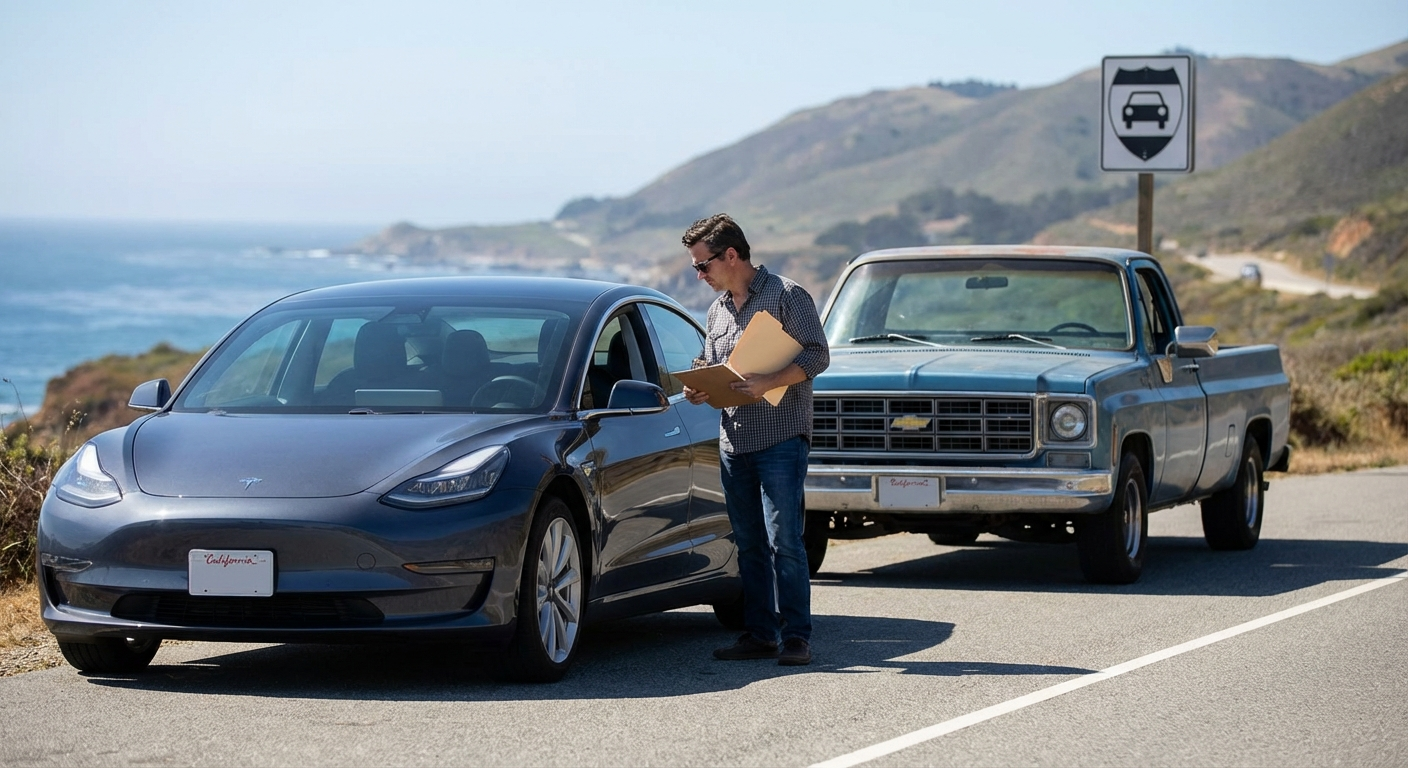
The same goes for property damage. Think about a relatively minor fender bender in Santa Monica. You tap a new BMW or a Tesla. $5,000 to fix modern cars? That’s barely enough for a new bumper and a headlight on some models. What happens when the repair bill is $10,000 or $20,000? You’d be paying out of pocket for the rest.
Most people don’t realize how quickly these minimums get swallowed up. That’s why most insurance professionals, like Karl Susman at LA Car Insurance Quotes, CA License #OB75129, will tell you that the state minimums are almost never enough to truly protect you. They’re a starting point, a legal requirement, but not a shield against real-world financial disaster.
Which brings up something most people miss: other kinds of coverage. Medical payments coverage, for instance, helps pay for your own medical bills, regardless of who caused the accident. Uninsured motorist coverage is another smart choice, especially in California. Sadly, too many drivers here don’t carry insurance at all. If one of them hits you, your uninsured motorist coverage can step in to cover your medical costs and car repairs. It’s a lifesaver when you’re dealing with someone else’s irresponsibility.
Then there’s collision and comprehensive coverage. These are optional, but if you have a newer car, or a loan on your car, you’ll almost certainly need them. Collision pays for damage to your car if you hit something (or another car). Comprehensive covers things like theft, vandalism, fire, or damage from a falling tree branch. If you’re driving an older car that’s paid off, you might skip these to save money. But if you rely on your car daily, losing it to an accident or theft without these coverages could be a nightmare.

The Shifting Sands of California Premiums: What’s Driving Up Your Bill?
It’s no secret that car insurance costs have been skyrocketing in California. If your premium jumped 30-50% between 2022 and 2024, you’re not alone. It’s a widespread problem, and it leaves many folks scratching their heads, wondering what they’re doing wrong. The truth is, it’s often not you. It’s a mix of big-picture factors that are hitting everyone.
First, inflation is real. The cost to repair cars has gone way up. Parts are more expensive. Labor costs for mechanics have increased. Even the cost of renting a temporary car while yours is in the shop has climbed. These higher repair costs translate directly into higher payouts for insurance companies, which means higher premiums for all of us.
That’s not the whole story. California has unique challenges. We’ve got huge population centers, which means more cars on the road, more traffic, and, unfortunately, more accidents. Imagine the daily grind on the 5 Freeway through the Valley, or the 101 in Ventura County. Accidents are just a fact of life there.
Here’s where it gets interesting. Even climate events play a role. While car insurance isn’t directly tied to wildfires like home insurance, widespread natural disasters can strain the entire insurance market. If, say, the hypothetical 2025 LA fires were to cause massive property damage and displacement, it could indirectly affect the general stability of the insurance market, potentially making insurers more cautious in offering *any* type of coverage.
And then there’s Prop 103. This is a California law from 1988 that keeps insurance companies from just raising rates whenever they want. They have to get approval from the state’s Department of Insurance. The goal is to protect consumers, but sometimes, the process moves slowly. When costs for insurers are going up fast, and they can’t raise rates quickly enough, some companies get nervous. You’ve seen it happen: big names like State Farm, AAA, and Farmers have either limited new policies or pulled back from certain lines of business here. This means fewer options for consumers, and sometimes, higher prices from the companies that are still actively writing policies. It’s a tough spot for everyone.
Your Driving Record: The Biggest Predictor
While those big-picture factors affect everyone, your personal driving record is still probably the single biggest thing that controls your premium. Got a few speeding tickets? An at-fault accident or two? You’re going to pay more. It’s that simple. Insurance companies look at you as a higher risk.
On the flip side, California’s Prop 103 also guarantees a “good driver discount” for those with a clean record for three years. No tickets, no at-fault accidents. That can save you a chunk of money. So, driving safely isn’t just about avoiding accidents; it’s about keeping your wallet happier.
Where You Live Matters More Than Ever
Another huge factor is your ZIP code. Seriously. Living in a densely populated area with high traffic and higher rates of car theft, like parts of the Inland Empire or certain neighborhoods in the Valley, will almost certainly mean higher premiums than living in a quieter, less congested area. Insurers look at the claims history for your specific area. If there are more accidents, more thefts, or more vandalism claims in your neighborhood, everyone in that area pays a bit more. It’s not fair, but it’s how the math works for them.
Finding Coverage When It Feels Impossible
It’s a scary feeling when you’ve been turned down for car insurance, or when the quotes you’re getting are just unbelievably high. Maybe you’ve had a few accidents, or a DUI, or you’re a young driver. You might feel like no one wants to cover you. But remember, you’re not alone in that feeling. Many Californians face these hurdles.
The good news is, California has a safety net for drivers who can’t get insurance in the regular market. It’s called the California Automobile Assigned Risk Plan, or CAARP. Think of it as the state’s “insurer of last resort.” If you’ve tried and been denied by at least two insurance companies, CAARP can help you get basic liability coverage. It won’t be cheap, and it might not offer all the bells and whistles, but it ensures you can legally drive.
The Agent’s Edge: Why Independent Help Is Gold
But wait — here’s why talking to an independent insurance agent, like Karl Susman at LA Car Insurance Quotes, CA License #OB75129, can make all the difference. An independent agent doesn’t work for just one insurance company. They work for *you*. They have relationships with many different insurers, including those who specialize in high-risk drivers or those who are more competitive in specific California regions. They know the market inside and out. They understand the quirks of Prop 103 and CAARP.
If you’re feeling overwhelmed, or if you’ve been struggling to find good rates, an independent agent can search multiple companies for you, compare policies, and help you find the best fit for your situation and budget. They can explain the complex stuff in plain language. They can even help you apply for CAARP if that’s your best option. It’s like having a guide through a confusing maze. Don’t go it alone. Get a helping hand.
Ready to see what options are out there for you? Even if you’ve been turned down before, it’s worth a conversation. Get a quote today and let Karl Susman and his team help you find the right coverage.
Preparing for 2026: Practical Steps You Can Take Now
Looking ahead to 2026, the core requirements probably won’t change, but the landscape of how much you pay, and how easy it is to get coverage, will likely keep evolving. So, what can you do today to prepare?
* Review your policy annually. Don’t just auto-renew. Call your agent, or go online, and make sure your coverage still fits your needs. Maybe you don’t drive as much as you used to. Maybe your car is older now. You might be able to save some money.
* Consider telematics or usage-based insurance. Many companies offer devices or apps that track your driving habits – how fast you drive, how often you brake hard, how many miles you cover. If you’re a safe driver, this can sometimes lead to discounts. But here’s the kicker: if you’re not, it could actually raise your rates. Know yourself.
* Maintain a clean driving record. This is probably the most effective long-term strategy. Avoiding tickets and accidents pays off, year after year.
* Increase your deductibles. If you can afford to pay more out of pocket if you have a claim, raising your deductible (say, from $500 to $1,000) can lower your premium. Just make sure you have that extra cash set aside in case you need it.
* Ask about discounts. Seriously, there are tons of them. Multi-car discounts, good student discounts, discounts for certain professions, even discounts for paying your premium in full. You won’t know unless you ask!
Don’t let the complexities of California car insurance leave you feeling powerless. Take control by understanding your options and working with someone who can guide you. If you’re tired of high rates or just want to make sure you’re properly protected for 2026 and beyond, it’s time to act. Find out what’s available for you and get a personalized car insurance quote right now.
Frequently Asked Questions About California Car Insurance
Will California’s minimum car insurance requirements change by 2026?
The state’s minimum liability requirements (15/30/5) have been stable for many years. While it’s always possible for laws to change, significant adjustments to these core numbers by 2026 are unlikely. However, the cost of meeting these requirements, and the practical protection they offer, is definitely changing.
Why are California car insurance premiums so high?
Several factors contribute to high premiums. These include rising costs for car repairs and labor, increased traffic congestion and accident rates in populated areas like the Inland Empire, and the regulatory environment under Prop 103 which can sometimes slow down rate adjustments, causing insurers to limit offerings. Also, local factors like theft rates in your specific zip code play a big part.
What happens if I can’t find affordable car insurance in California?
If you’ve been turned down by at least two standard insurance companies, you might be eligible for coverage through the California Automobile Assigned Risk Plan (CAARP). This is a state-mandated program that ensures all drivers can get basic liability insurance. An independent agent like Karl Susman can help you explore this option.
Is it worth getting more than the minimum liability coverage?
Most insurance professionals would say yes, absolutely. The state minimums of $15,000 for single injury and $5,000 for property damage are rarely enough to cover the actual costs of even a moderate accident in today’s economy. Carrying higher limits protects you from significant out-of-pocket expenses and potential lawsuits.
This article is for informational purposes only and does not constitute financial advice.
Ready for Your Free Quote?
No obligation. Takes 2 minutes. Speak with Karl Susman and the team at LA Car Insurance Quotes.