
- What “full coverage” actually means in California, beyond the common myths.
- The essential components: Liability, Collision, and Comprehensive.
- Why Uninsured/Underinsured Motorist coverage is a must-have in the Golden State.
- Additional protections like Medical Payments and Rental Car reimbursement.
- Factors that seriously impact your premium, from your driving record to your zip code.
- Practical steps to find the right policy and potentially save some money.
The Real Deal with “Full Coverage” in California
Honestly, “full coverage” isn’t a single policy you can just tick a box for. It’s a common term, sure, but it’s really a package of different insurance types, all working together to protect you, your car, and your wallet in California’s wild driving world. Think of it less as a pre-made meal and more like a buffet where you pick the dishes that suit your appetite for risk.
For most drivers, especially those with a car loan or lease, this collection of coverages is a requirement. Lenders want to make sure their asset — your car — is protected. But even if you own your car outright, piecing together a robust “full coverage” plan just makes good financial sense.
Step 1: The Foundation — Liability Insurance
Every driver in California needs liability insurance. It’s the law. This coverage protects other people and their property if you’re at fault in an accident. It doesn’t pay for your car or your injuries. It pays for *theirs*.
Your liability coverage actually comes in two parts:
* Bodily Injury Liability (BIL): This pays for medical expenses, lost wages, and pain and suffering for anyone you injure in an accident. California’s minimums are pretty low: $15,000 for one person injured in an accident, and $30,000 for all people injured in one accident.
* Property Damage Liability (PDL): This pays for damage to another person’s property — usually their car, but it could be a fence, a building, or a mailbox. The Golden State’s minimum is just $5,000.
Here’s the thing. Those minimums? They’re barely enough to cover a fender bender in a parking lot, let alone a serious crash on the 101. Imagine a multi-car pile-up on the 405 near the Sepulveda Pass. If you’re deemed at fault and only have minimum coverage, you could be on the hook for tens, even hundreds of thousands of dollars out of your own pocket. Most people opt for much higher limits, like $100,000/$300,000 for bodily injury and $50,000 or $100,000 for property damage. It costs a bit more, but it offers a whole lot more peace of mind.

Step 2: Protecting Your Ride — Collision Coverage
This is where you start protecting *your* car. Collision coverage pays to repair or replace your vehicle if it’s damaged in an accident, regardless of who was at fault.
Think about it: you swerve to avoid a deer on Highway 1 and hit a guardrail. Your collision coverage kicks in. Or, someone rear-ends you on Van Nuys Boulevard, and while their property damage liability should cover it, sometimes things get complicated. Your collision coverage will pay to fix your car, and your insurer will then go after the at-fault driver’s insurance to get their money back.
How it works: you choose a deductible — usually $500 or $1,000. That’s the amount you pay out of pocket before your insurance company starts paying. A lower deductible means higher premiums, and vice versa. It’s a balancing act.
Step 3: Beyond the Crash — Comprehensive Coverage
Collision handles accidents. But what about everything else? That’s where comprehensive coverage steps in. This protects your car from “non-collision” events.
We’re talking about things like:
* Theft
* Vandalism
* Fire (a real concern with California wildfires, especially in places like the Santa Clarita Valley or the hills around Malibu)
* Falling objects (like a tree branch during a winter storm)
* Natural disasters (floods, hail, earthquakes — though earthquake damage to your car usually falls under comprehensive)
* Hitting an animal (like a deer on a rural road in Sonoma County)
Like collision, comprehensive coverage also has a deductible. Often, people choose the same deductible for both collision and comprehensive, but you don’t have to. Sometimes, a lower comprehensive deductible makes sense if you live in an area prone to car break-ins or severe weather.
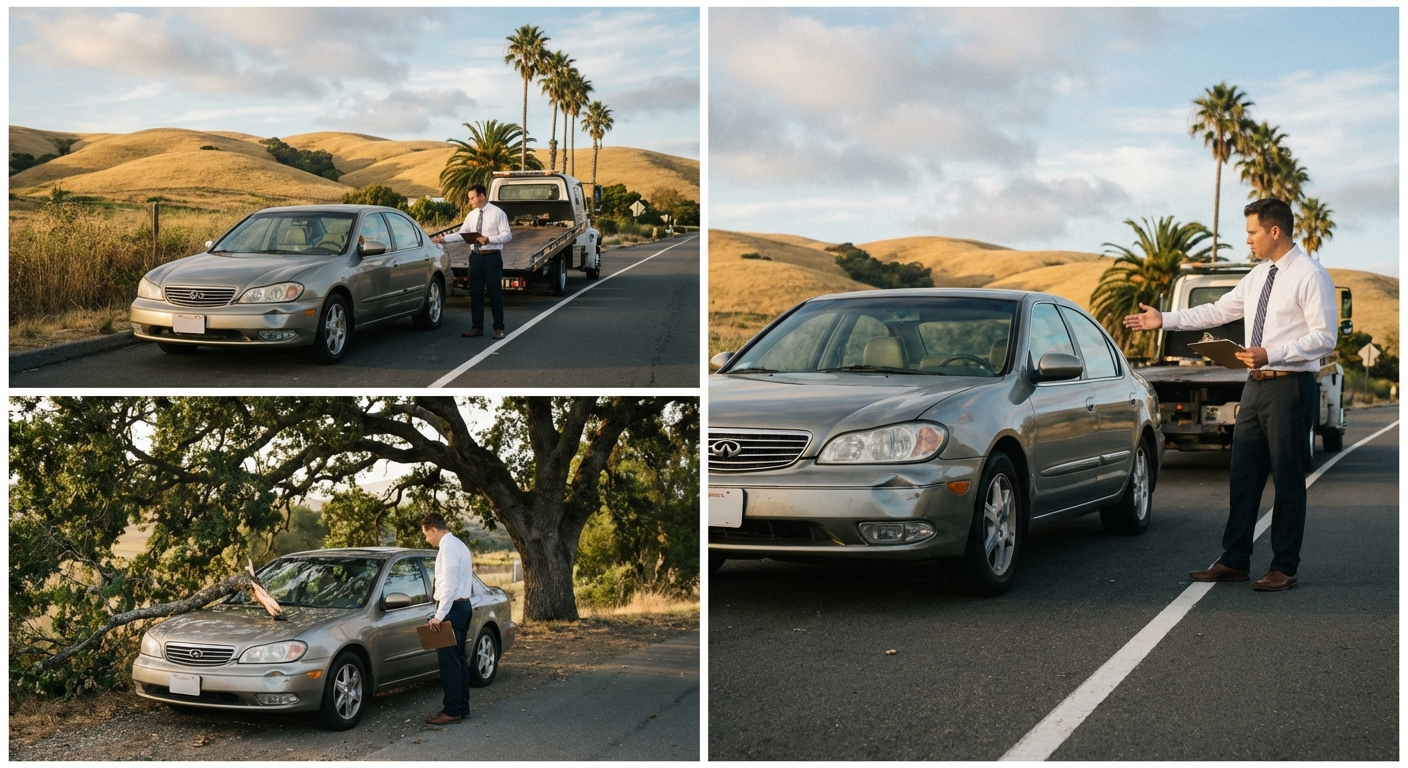
Step 4: The California Necessity — Uninsured/Underinsured Motorist (UM/UIM) Coverage
This coverage is arguably one of the most important for California drivers. Why? Because despite the law, a significant number of drivers on our roads don’t have insurance, or they only carry those bare-minimum liability limits.
If an uninsured driver hits you, who pays for your medical bills and damage to your car? Your UM/UIM coverage does. It comes in two parts:
* Uninsured Motorist Bodily Injury (UMBI): This pays for your medical expenses, lost wages, and pain and suffering if an uninsured or hit-and-run driver injures you or your passengers.
* Uninsured Motorist Property Damage (UMPD): This pays for the damage to your car if an uninsured driver hits you. It usually has a deductible, often $250 or $500.
But wait — there’s also *underinsured* motorist coverage. This kicks in if the at-fault driver has insurance, but their liability limits aren’t high enough to cover all your damages. Your UIM coverage will then pay the difference, up to your policy limits.
California law allows you to waive UM/UIM coverage. Don’t do it. Seriously. Given the sheer volume of traffic and the number of uninsured drivers, especially in metropolitan areas like Los Angeles or the Bay Area, this coverage is a shield you absolutely need.
Step 5: Filling in the Gaps — The Often-Overlooked Extras
Once you have liability, collision, comprehensive, and UM/UIM, you’ve got the core of what most people call “full coverage.” But there are still a few optional coverages that can make a huge difference if you ever need them.
* Medical Payments (MedPay): This covers medical expenses for you and your passengers, regardless of who was at fault in an accident. It’s a “no-fault” coverage for medical bills, and it can be a lifesaver if you have a high health insurance deductible or don’t have health insurance at all.
* Rental Car Reimbursement: If your car is in the shop after a covered accident or loss, this pays for a rental car so you can still get around. Policies usually have a daily limit (e.g., $30/day) and a total limit (e.g., $900 per claim).
* Roadside Assistance: Flat tire? Dead battery? Locked yourself out? Roadside assistance can be a cheap add-on that saves you a lot of hassle.
* Loan/Lease Gap Coverage: If your car is totaled and you owe more on your loan or lease than the car is worth, standard collision coverage only pays the actual cash value. Gap coverage pays the difference, so you’re not stuck making payments on a car you no longer have. This is a smart choice if you have a new car, a long loan term, or made a small down payment.
Step 6: What Drives Your California Premiums?
Even with the exact same “full coverage” package, two drivers can pay vastly different premiums. Why? Because insurers look at a lot of factors to assess risk.
* Your Driving Record: This is huge. Accidents, speeding tickets, DUIs — they all scream “risk” to an insurer and will send your rates soaring. A clean record, on the other hand, often earns you a good driver discount.
* Your Vehicle: Is it a brand-new luxury SUV or an older sedan? More expensive cars cost more to repair or replace. Sports cars or vehicles with high theft rates (like certain models popular in Los Angeles) also tend to have higher premiums. Safety features, however, can sometimes earn you a discount.
* Your Location: Where you live and park your car matters a lot. Premiums are generally higher in dense urban areas like downtown San Francisco or parts of the Valley, where there’s more traffic, more accidents, and higher theft rates. Move to a quieter area, say, in rural Shasta County, and your rates might drop.
* Annual Mileage: The more you drive, the more likely you are to be in an accident. If you work from home in Orange County and barely put miles on your car, you might qualify for a low-mileage discount.
* Your Age and Experience: Younger, less experienced drivers typically pay more. As you gain more years behind the wheel without incidents, your rates tend to decrease.
* Credit-Based Insurance Scores: While California’s Proposition 103 limits how much insurers can use credit scores compared to other states, it can still be one factor among others.
Many Californians saw their premiums jump significantly, sometimes 30-50% or more, between 2022 and 2024, depending on their insurer and location. This isn’t just a California thing, but it certainly hit hard here. It’s why staying on top of your policy and shopping around is so important.
Step 7: Finding the Right Fit and Saving Money
Now you know what goes into “full coverage.” But how do you get the best deal without sacrificing protection?
* Shop Around: This is probably the single most effective way to save money. Don’t just stick with the first quote you get. Different insurers — like State Farm, AAA, Farmers, or smaller regional carriers — have different pricing models and might offer better rates for your specific profile.
* Bundle Policies: If you have homeowners or renters insurance, bundling your auto policy with the same company can often lead to substantial discounts.
* Ask About Discounts: Always ask your agent about every discount available. Good driver, multi-car, anti-theft devices, good student, low mileage, professional affiliations — the list goes on.
* Adjust Deductibles: If you have a healthy emergency fund, consider raising your collision and comprehensive deductibles. Going from $500 to $1,000 can noticeably lower your premiums. Just make sure you can comfortably afford that deductible if you ever need to file a claim.
* Review Your Coverage Annually: Your needs change. When your car gets older, you might consider dropping collision and comprehensive if its value drops significantly. Or, if you move to a new area, your risk profile changes.
Getting expert advice can make a real difference. Karl Susman of LA Car Insurance Quotes (CA License #OB75129) has been helping Californians find the right insurance for years. He understands the unique challenges of the California market. Ready to see what kind of “full coverage” works for you? Get a California car insurance quote today!
Step 8: The “Full Coverage” Reality Check
Remember, “full coverage” isn’t a single magical policy. It’s a combination of coverages you choose to protect yourself, your passengers, and your vehicle from a wide range of risks on California’s roads. It’s about tailoring that protection to your specific needs, your budget, and your peace of mind.
Don’t just assume you’re “fully covered” without understanding what’s in your policy. Take the time to review each component and ensure it aligns with your financial situation and driving habits. Your car is a major investment, and protecting it properly is just smart. Want to explore your options and build a policy that truly fits? Click here to get started with a personalized quote.
Frequently Asked Questions About California Full Coverage Car Insurance
Do I really need “full coverage” if my car is old?
Not always. If you own your car outright and its market value is low – say, under $3,000 to $5,000 – the cost of collision and comprehensive coverage might outweigh what you’d get back in a claim, especially after your deductible. In those cases, some drivers opt for just liability and strong Uninsured/Underinsured Motorist coverage. But if you have a loan or lease, “full coverage” is usually mandatory.
What’s the main difference between comprehensive and collision coverage?
Big difference. Collision covers damage to your car from an accident, like hitting another car, a tree, or rolling over. Comprehensive covers damage from non-collision events: theft, vandalism, fire, natural disasters, or hitting an animal. Think “crash” for collision, and “everything else” for comprehensive.
Can I drop full coverage at any time?
If you own your car free and clear, yes, you can modify or drop collision and comprehensive coverage whenever you want. If you have a car loan or lease, you’re usually contractually obligated to maintain these coverages until the loan is paid off. Dropping them could violate your agreement and lead to serious financial penalties.
How does California’s Proposition 103 affect my car insurance rates?
Prop 103, passed back in 1988, is a big deal for California insurance. It requires insurers to get approval from the Department of Insurance before raising rates. It also mandates that rates be based primarily on three factors: your driving record, the number of miles you drive annually, and your years of driving experience. Other factors, like your zip code or credit score, can still play a role, but they’re secondary. It’s meant to keep rates fairer and prevent arbitrary increases.
—
This article is for informational purposes only and does not constitute financial advice.