
Collision Coverage: What It Is, And Why Californians Often Need It
You’re driving down the 405, maybe heading through the Sepulveda Pass. Suddenly, traffic jams up. Someone swerves. Or maybe you’re just backing out of your driveway in Ventura County, and clip a mailbox. That’s where collision coverage steps in. It’s the part of your auto policy designed to pay for damage to your own car when it hits another vehicle, or when it hits an object like a pole, a fence, or even that rogue shopping cart in the supermarket parking lot.
Think of it this way: if your car collides with something, this coverage handles the repair bill for your ride. It doesn’t matter who was at fault in the crash. If you caused the accident, your collision coverage pays. If someone else caused it, their liability insurance should pay for your damages, but collision can still help you get your car fixed faster, and then your insurer will try to get their money back from the at-fault driver’s insurance.
Most folks don’t realize just how often this type of claim happens in California. With millions of cars on the road, from the congested streets of downtown LA to the busy highways of the Inland Empire, fender benders are a daily reality. Even a minor bump can mean thousands in repairs for today’s complex vehicles.
There’s a deductible involved, of course. That’s the amount you agree to pay out of pocket before your insurance kicks in. Typical deductibles might be $500 or $1,000. Pick a higher deductible, and your premium usually goes down. But here’s the thing: make sure you can actually afford that deductible if you need to file a claim. You don’t want to be stuck with a smashed bumper and no cash to cover your share.
When Collision Coverage Becomes a Must
Honestly, if you’re financing or leasing a car, your lender almost certainly requires collision coverage. They’ve got a financial stake in your vehicle, and they want to protect their investment. It makes sense. They don’t want to be left with a totaled car and no way to get their money back.
Even if your car is paid off, collision coverage is often a smart move, especially if your vehicle still has significant value. Imagine totaling your 2020 Honda CR-V. Without collision, you’d be footing the bill for a new car yourself. That’s a huge financial hit for most families.
But wait — what if your car is older? Say, a 2008 Toyota Camry with 180,000 miles? Some folks argue that if your car’s market value is less than the cost of your deductible plus a few months of premiums, it might not be worth carrying collision coverage. That’s a personal call, and it depends a lot on your financial situation and how easily you could replace the car if it got totaled.

Comprehensive Coverage: Beyond the Crash
Now, let’s talk about comprehensive coverage. This is the “other” major physical damage coverage for your car, and it’s often misunderstood. While collision handles crashes, comprehensive covers almost everything else that can happen to your vehicle, things that aren’t a direct result of hitting another car or object.
Think about California’s unique challenges. Remember the intense wildfire seasons? The 2025 LA fires, for instance, could easily damage or destroy vehicles caught in their path. Comprehensive coverage would handle that. What about hail storms in the Central Valley, or falling tree branches during a winter storm in the Sierra foothills? Yep, comprehensive.
It also covers theft. Sadly, car theft remains a real problem in parts of California, particularly in denser urban areas like the Valley. If your car disappears from your driveway or a parking garage, comprehensive coverage is what pays out. Vandalism, like someone keying your car or smashing a window, also falls under this umbrella. Even things like hitting an animal — a deer in a rural area, for example — that’s typically a comprehensive claim, not collision.
Like collision, comprehensive coverage also comes with a deductible. You choose an amount, and that’s what you pay before your insurer covers the rest. Again, a higher deductible means lower premiums, but be prepared to pay that amount if you need to file a claim.
Why Comprehensive Matters in the Golden State
California isn’t just about traffic. It’s also about earthquakes, wildfires, and sometimes, unpredictable weather. These natural events, while rare for any single car, can be devastating. Having comprehensive coverage means you’re protected against these unforeseen circumstances. It offers a peace of mind that goes beyond just worrying about your daily commute.
For anyone living in areas prone to specific risks — say, near brushland that might catch fire, or in neighborhoods with higher rates of car break-ins — comprehensive coverage isn’t just a good idea; it’s practically a necessity. Insurers like State Farm, AAA, and Farmers all offer this protection, recognizing the diverse risks across the state.
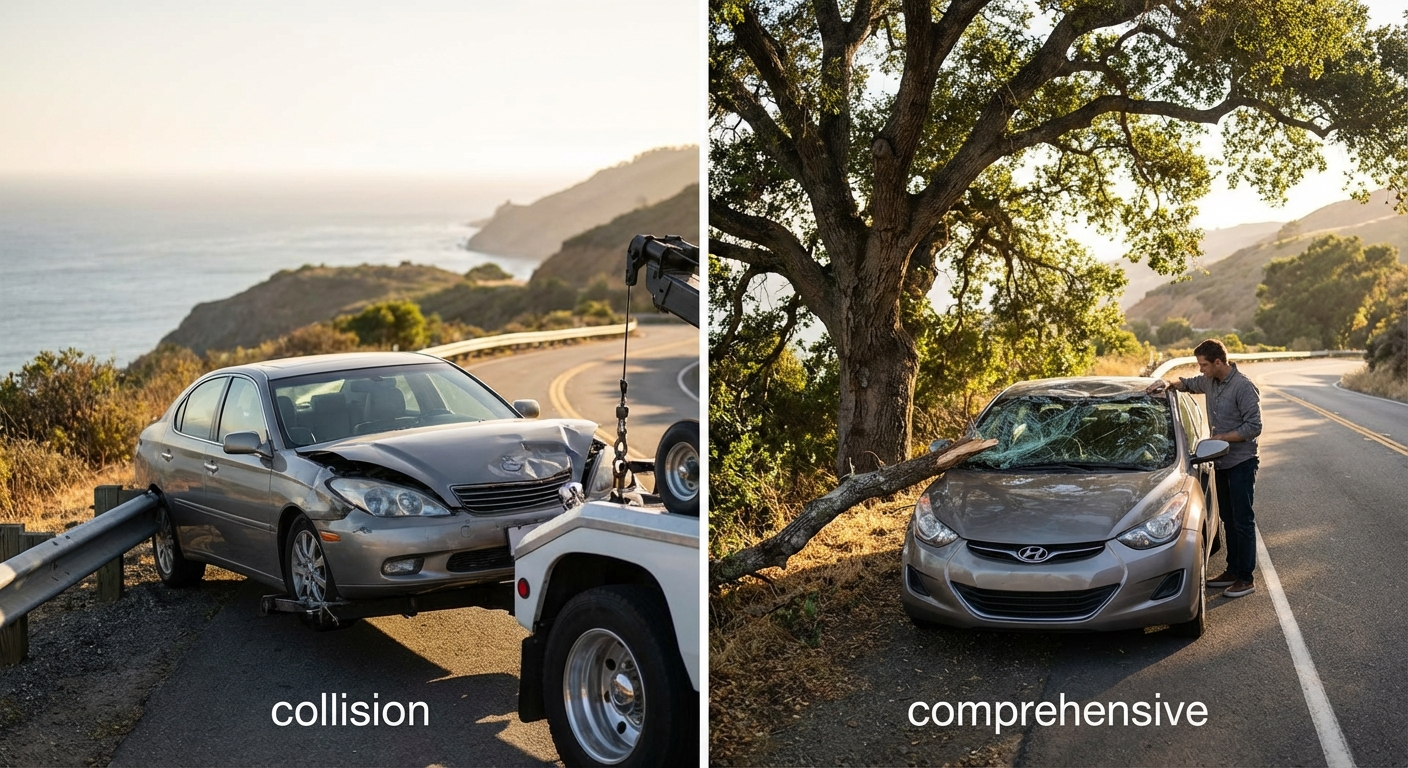
The Big Difference: Collision vs. Comprehensive
So, you might be asking: What’s the real difference? It’s pretty simple when you break it down:
- Collision: Covers damage to your car from hitting something else (another car, a tree, a guardrail).
- Comprehensive: Covers damage to your car from almost everything else (theft, vandalism, fire, natural disasters, hitting an animal).
Let’s use an example. You’re driving on the I-5 near Stockton, and you swerve to avoid a semi-truck, hitting the center divider. That’s a collision claim. Your car is parked in San Francisco, and someone breaks a window to steal your laptop. That’s a comprehensive claim. You hit a deer on Highway 101 near Big Sur. That’s comprehensive. You accidentally back into a pole in a crowded parking lot in Orange County. That’s collision.
They’re distinct coverages, but they work together to protect your vehicle from a wide array of potential damages. Most people who carry one also carry the other, especially for newer or more valuable cars.
Do You Need Both? The California Perspective
For most California drivers, especially those with car loans, the answer is a resounding yes. Lenders insist on both collision and comprehensive coverage to protect their asset. It’s non-negotiable until that loan is paid off.
If your car is paid off, the decision becomes more personal. What’s your car worth? What’s your financial situation? Could you easily afford to repair or replace your car if it was totaled in a crash or stolen? If the answer to that last question is “no,” then keeping both coverages probably makes sense.
Which brings up something most people miss: the cost of car insurance in California has been a hot topic. Premiums jumped significantly between 2022 and 2024 for many drivers, sometimes by 20% or even 40% in some areas. This is due to a mix of factors: rising repair costs, more frequent and severe accidents, and the higher cost of parts. Prop 103, while designed to protect consumers, has also created complexities for insurers operating in the state, impacting how rates are approved and adjusted.
So, while you might be tempted to drop coverage to save money, consider the potential financial risk. Sometimes, saving a few hundred dollars a year on premiums could cost you thousands if something goes wrong.
Making the Right Choice for Your Policy
Choosing the right mix of collision and comprehensive coverage, along with appropriate deductibles, isn’t always straightforward. It requires a careful look at your car’s value, your budget, and your personal risk tolerance. You want enough protection without overpaying for coverage you might not truly need.
This is where an experienced insurance professional makes a real difference. Someone who understands the nuances of California’s insurance market can help you weigh your options. They can explain how different deductibles affect your monthly premium, and help you understand the true cost of dropping coverage.
If you’re feeling a bit lost in the details, don’t hesitate to reach out. Karl Susman of LA Car Insurance Quotes, CA License #0B75129, has helped countless Californians find the right auto insurance for their needs. A quick call to (877) 411-5200 can clarify a lot. Or, if you’re ready to explore some options right now:
Get a California Car Insurance Quote Today
Frequently Asked Questions About Car Insurance in California
Is collision insurance legally required in California?
No, collision insurance isn’t legally required by the state of California. However, if you have a car loan or lease, your lender will almost certainly mandate it to protect their investment in the vehicle.
What’s a typical deductible for collision or comprehensive coverage?
For most California drivers, common deductibles are $500 or $1,000. Some policies offer $250 or even $2,500 deductibles. Choosing a higher deductible typically lowers your premium, but remember you’ll pay that amount out of pocket if you file a claim.
Will my rates go up if I file a comprehensive claim, like for a broken windshield?
Not always. Comprehensive claims are generally considered “no-fault” incidents, meaning they aren’t tied to your driving record. While a single comprehensive claim might not drastically increase your rates, a history of multiple claims could signal higher risk to an insurer and potentially affect your premium.
Can I have comprehensive coverage without collision, or vice-versa?
Yes, you can. While most people who carry one also carry the other, it’s possible to have just one. For example, some drivers with older, low-value cars might drop collision but keep comprehensive to protect against theft or fire. Or, if you have an old car you only drive occasionally, you might just carry liability and comprehensive.
How does my location in California affect the cost of these coverages?
Your location plays a big role. If you live in a high-traffic area like downtown Los Angeles or a neighborhood with higher theft rates, your collision and comprehensive premiums will likely be higher. Conversely, drivers in more rural parts of California might see lower rates for these coverages.
Ready to see what options are available for your California car insurance?
This article is for informational purposes only and does not constitute financial advice.